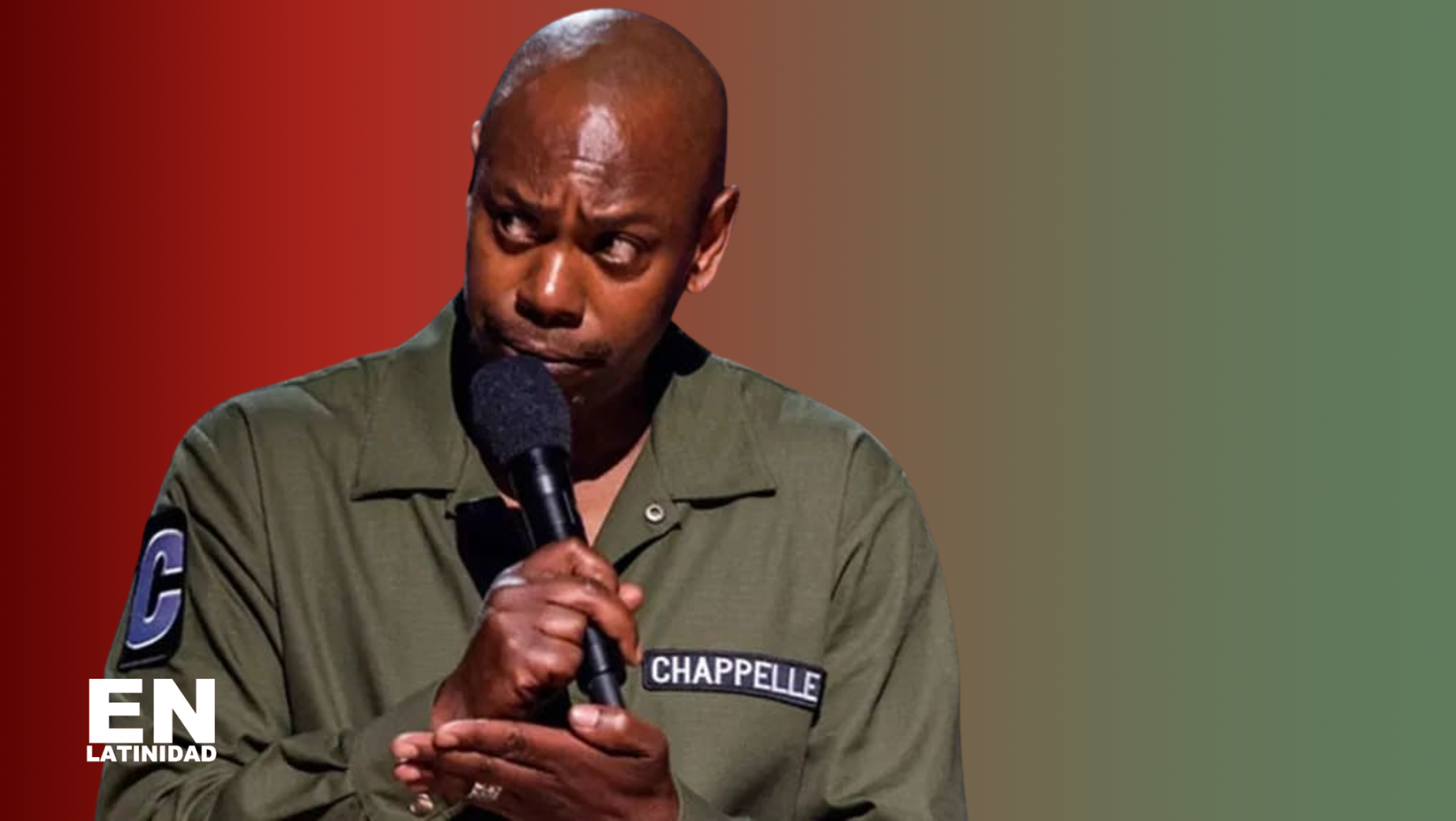
Dave Chappelle’s latest stand-up special, The Unstoppable, positions itself as both a victory lap and a provocation—an assertion that no amount of criticism, backlash, or cultural shift can slow him down. And in many ways, that’s true. Chappelle remains one of the most skilled storytellers in comedy, with impeccable timing, an unmatched command of silence, and an ability to turn personal anecdotes into cultural observation. But The Unstoppable also underscores a growing tension in his work: the widening gap between technical brilliance and thematic stagnation.
Much of the special leans on the same tired, excessive, and increasingly corny jokes about transgender people that have appeared in several of his recent sets. What once may have been framed as boundary-pushing now feels repetitive and lazy—less like social commentary and more like punching down out of habit. The issue isn’t that Chappelle addresses trans people at all; comedy has always engaged with difficult, uncomfortable topics. The problem is that these jokes no longer evolve. They don’t reveal new insight, challenge power, or advance the conversation. Instead, they feel outdated, rehearsed, and overly reliant on shock value rather than wit.
There’s a broader argument embedded in The Unstoppable—one that Chappelle returns to repeatedly—about free speech and the idea that comedians should be allowed to say whatever they want without repercussion. While it’s true that comedy requires freedom, the special seems to conflate “no censorship” with “no accountability.” Freedom to tell jokes does not automatically make those jokes meaningful, brave, or great. Great comedy doesn’t just punch below the belt; it interrogates power, exposes contradiction, and drives a productive conversation forward. Chappelle is clearly wrestling with this duality—at times critiquing the culture of outrage while simultaneously indulging in it. The Unstoppable ends up being an example of him doing both: challenging certain taboos while also retreating into familiar, less ambitious territory.
Where the special shines is when Chappelle turns his attention inward or upward. His set about owning a majority of land in Yellow Springs, Ohio, as a Black man is genuinely funny and sharp, blending personal success with historical irony. It’s classic Chappelle—self-aware, culturally grounded, and incisive—highlighting how absurd and meaningful that achievement is in the context of American racial history. These moments remind the audience why he’s still regarded as one of the greatest to ever hold a mic.
Equally compelling is his commentary on free speech in the United States versus Saudi Arabia. Chappelle’s comparison of censorship, cultural limits, and foreign policy offers a more nuanced and intellectually engaging angle than much of the controversy surrounding the special. Here, he’s at his best: curious, reflective, and willing to sit with complexity rather than provoke for provocation’s sake. These observations feel less like a defense of himself and more like a genuine inquiry into how power, speech, and control operate differently across global contexts.
In The Unstoppable, Chappelle delivers some of his sharpest social commentary when dissecting the absurd comparisons between Charlie Kirk and Martin Luther King Jr. He contextualizes the significance of MLK Jr.’s legacy, explaining the decades-long lobbying efforts to establish Martin Luther King Jr. Day—with notable support from figures like Stevie Wonder—and the persistence required to honor civil rights history in the face of political resistance. Chappelle highlights the irony and hypocrisy of John McCain being the only Republican senator to vote against the holiday, using humor to underscore how out-of-touch modern comparisons can be when stripped of historical context. These segments show Chappelle’s ability to weave comedy with critical historical and political insight, creating moments that are both funny and thought-provoking.
On a lighter, more personal note, Chappelle turns his lens toward contemporary celebrity culture, making pointed commentary on Diddy’s perceived laziness in the industry. While these observations land with comedic precision, his shots at Cassie cross into tasteless territory, relying on cheap humor rather than insightful critique. These moments illustrate a recurring tension in the special: Chappelle’s brilliance in social observation is occasionally undermined by jokes that feel outdated, mean-spirited, or gratuitous. Attempting to soften his critique with lines like “God bless her,” Chappelle undercuts any genuine empathy by segueing into a comparison of her alleged settlement payment to the earnings of top boxers like Floyd Mayweather. This turn not only feels gratuitous but also trivializes the serious experiences of domestic violence survivors, reducing a deeply personal and traumatic matter to a punchline. It’s a reminder that even in his sharpest observations, Chappelle sometimes blurs the line between incisive satire and tasteless commentary, and this segment is an instance where the joke could have been left on the cutting room floor.
Ultimately, The Unstoppable is a mixed bag—proof that Dave Chappelle is still a master of the craft, but also evidence that mastery alone isn’t enough. The special oscillates between moments of real insight and stretches that feel stuck in the past. Chappelle may indeed be unstoppable, but the question the special leaves behind is whether he’s still interested in moving forward.