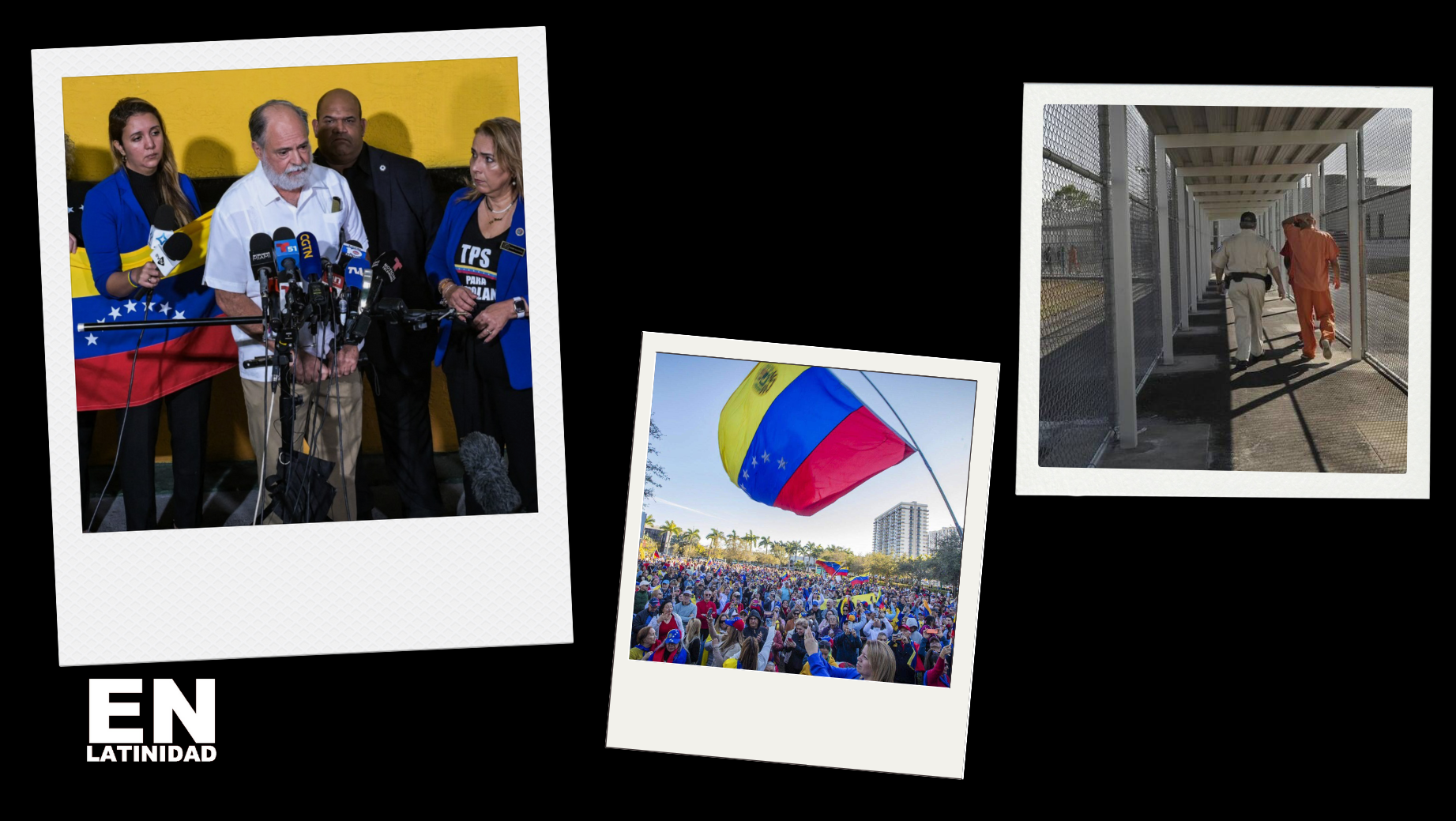
For too long, too many Latino communities in the United States—especially sectors of Venezuelans and Cubans in Florida—have operated under the illusion that proximity to whiteness provides protection. That aligning politically with white conservative power structures will somehow exempt them from the very systems built to exclude, target, and oppress immigrants, racialized communities, and anyone coded as “other.” The 2024 election cycle, and the Trump administration’s renewed attacks on immigrant communities, ICE raids, family separations, and deportation machinery, has shattered that illusion once and for all.
But this moment is about more than political disappointment. It’s about accountability. It’s about confronting the uncomfortable truth that complicity in white supremacy has real consequences—often for the very communities who believed they were immune.
When Venezuelans and Cubans in Florida voted in high margins for Trump, many justified it through a “not us, it’ll affect them” mentality. A belief that punitive immigration policies would target Central Americans, Mexicans, or undocumented people from other countries—not those who came fleeing dictatorship, socialism, or economic collapse. That ICE raids were someone else’s problem. That racism was something that happened to “other people,” not those who claimed whiteness, or weaponized anti-Blackness within our own communities.
It’s been a year, and the silence has gone on long enough. The real conversation is overdue.
Because the truth is simple: Racism is everybody’s problem. And many Latinos have benefited from rights, protections, and social progress that were won primarily by African American and Black communities in the U.S.—often while Latinos distanced themselves, looked away, or claimed neutrality.
Civil rights?
Voting rights?
Education access?
Labor protections?
Housing laws?
Police accountability movements?
Black communities fought (and continue to fight) the battles from which Latinos benefit daily. Many of the freedoms we rely on—especially as immigrants—exist because Black people demanded them, marched for them, bled for them, and died for them. And yet, too many Latinos refuse to acknowledge that history. Coñaso—wake up.
The shock many Latinos now feel at heightened ICE activity, racial profiling, xenophobic rhetoric, and mass deportation threats reveals a painful truth: much of our community has never understood that anti-racist, anti-police state, anti-capitalist movements are not “American liberal ideas.” They are liberation ideologies rooted in global resistance, especially in the Americas. They are part of our ancestral stories, whether we choose to recognize them or not.
What’s happening now is not “new.” It is the predictable outcome of aligning with systems built to criminalize immigrants, militarize borders, and preserve whiteness at all costs. When you feed the machine, eventually the machine comes for you.
For decades, Cuban and Venezuelan conservatives in Florida have leaned heavily into narratives of exceptionalism—“We’re not like those immigrants.” “Our situation is different.” “We came legally.” “We’re entrepreneurs.” “We vote for ‘law and order’ because chaos ruined our countries.” But the U.S. has never cared about the nuance of our stories. To white supremacy, we are all foreign. Brown. Spanish-speaking. Suspect.
You can’t out-behave racism. You can’t out-vote xenophobia. You can’t align with anti-immigrant ideologies and expect them to differentiate between “your people” and the next Latino family standing in line at Publix.
And now, as raids increase, as deportation sweeps intensify, as courts back policies that strip immigrant protections, too many Latinos are suddenly “surprised.” Surprised that the police state doesn’t discriminate. Surprised that racist policies don’t pause to check whether your parents came in the 60s or the 2010s. Surprised that supporting the architects of mass othering leads to—you guessed it—mass othering.
The silence during Black Lives Matter.
The dismissal of police brutality as a “Black issue.”
The mocking of abolitionist and anti-capitalist movements as “radical” or “gringo ideas.”
The refusal to stand in solidarity.
The internalized anti-Blackness.
The willful ignorance of systemic oppression.
The obsession with “order,” “respectability,” “good immigrants,” and “meritocracy.”
All of it paved the road to this moment.
Accountability means naming that. It means accepting that many Latinos have participated in the very systems hurting us today. It means letting go of the fantasy that whiteness—real or aspirational—will save us. It means unlearning the colonial hierarchies we inherited. It means confronting the anti-Blackness that thrives in our families, our politics, and our identities.
And most importantly, it means recognizing that real safety for Latinos will never come from alignment with white supremacy. Our safety comes from solidarity—with Black people, with Indigenous people, with queer and trans people, with undocumented communities, with migrant workers, with all those society marks as disposable.
The path forward requires humility, education, and transformation. It requires listening to the movements we once dismissed. It requires rejecting individualism for collective liberation. It requires embracing the truth that until all marginalized communities are safe, none of us are.
Latinos cannot rise by stepping on others. We rise by standing alongside them.
Eduquense, por el amor de Dios. Y hagan el trabajo.