
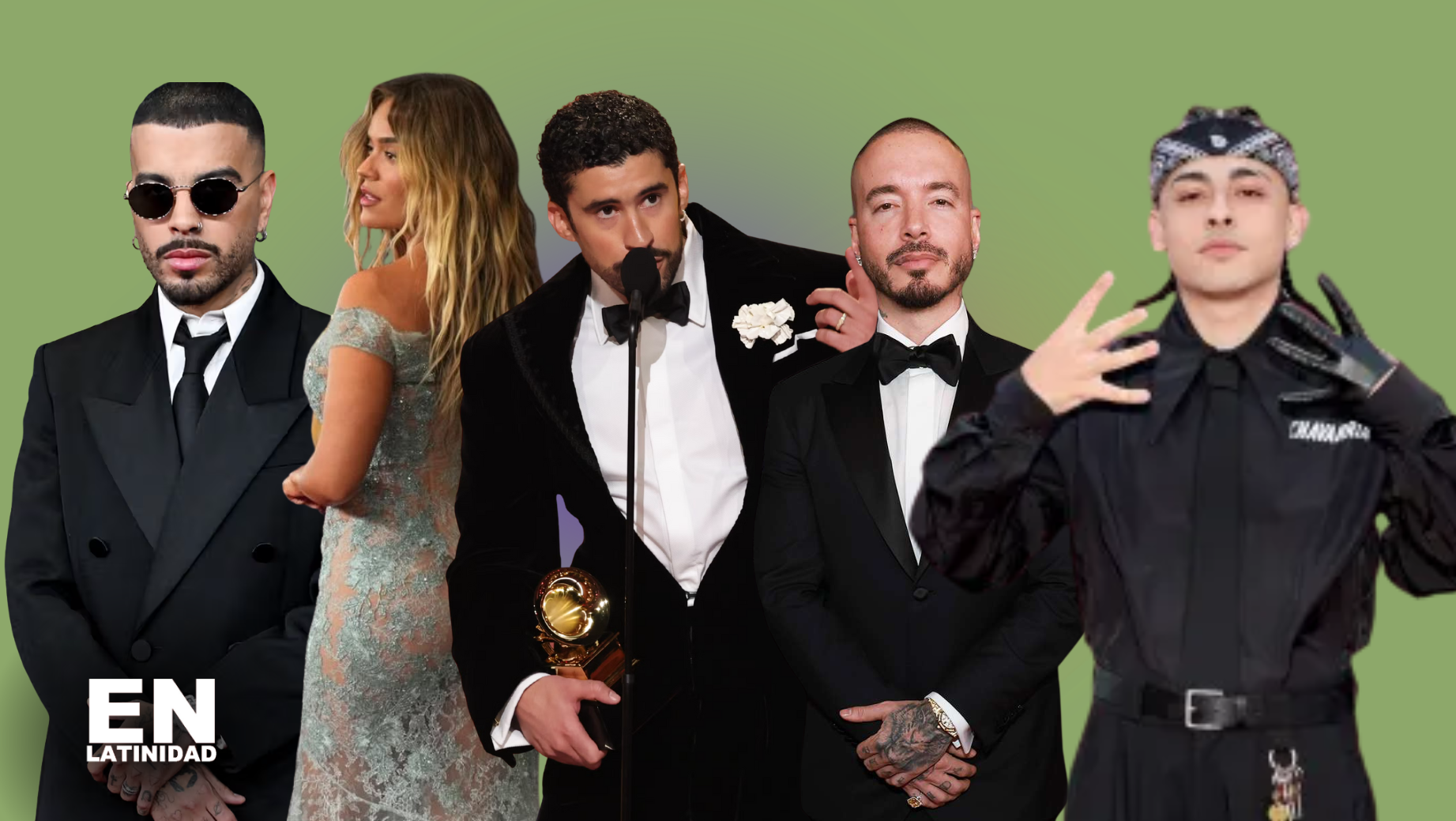
The 2026 Grammy Awards left the reggaeton community with plenty to celebrate. On paper, the genre showed up strong. Karol G, Trueno, Yandel, J Balvin, Feid, and Bad Bunny all earned nominations, signaling once again that música urbana is no longer treated as a fringe movement but as a global force worthy of the industry’s highest stage.
And Bad Bunny, in particular, had a night for the history books. His wins for Best Música Urbana Album, Global Performance of the Year, and the highly coveted Album of the Year felt both monumental and well deserved. Few artists have carried Latin music into the global mainstream with the same cultural weight, experimentation, and consistency. His victory reaffirmed what fans have known for years: reggaeton is not only commercially dominant, it is artistically undeniable. Yet even in celebration, there was an uncomfortable absence, one that couldn’t be ignored.
While reggaeton was recognized, its collective representation felt far removed from its Black roots, especially when contrasted with how profoundly Black the rest of the Grammys felt that night. Major wins from Doechii, Kendrick Lamar, Shaboozey, Leon Thomas, Durand Bernarr, and countless others made it clear: Black artistry, Black innovation, and Black narratives were being centered and honored across the ceremony, deservedly so.
Hip hop, as several presenters openly stated on stage, including Trevor Noa, remains the dominant cultural force shaping music today. This acknowledgment matters, because hip hop is not adjacent to reggaeton; it is foundational to it. Reggaeton was born from Black Caribbean communities, forged through Jamaican dancehall, Panamanian reggae en español, Afro-Puerto Rican sound systems, and diasporic Black youth culture long before it was polished for global consumption.
And yet, that Blackness rarely transcends in reggaeton’s mainstream Grammy-facing image.
This isn’t a new conversation. It’s one that resurfaces every award season, every time reggaeton wins big while simultaneously narrowing the faces and narratives allowed to represent it. The industry has made deliberate choices about who its ambassadors should be choices that often favor palatable, market-friendly images over historically accurate ones. As a result, reggaeton’s origins are routinely flattened, its Afro-diasporic lineage treated as a footnote rather than the foundation.
What made the contrast at the 2026 Grammys particularly stark was how openly Black culture was celebrated elsewhere in the room. Hip hop artists were honored not just for sales or reach, but for cultural leadership, storytelling, experimentation, and legacy. Blackness was not something to be diluted or explained it was the point.
Meanwhile, reggaeton, despite its global dominance, still struggles to have its Black creators and Afro-Latino lineage fully acknowledged on the same stage.
This isn’t about taking away from Bad Bunny’s wins or diminishing the achievements of those nominated. It’s about asking why a genre so deeply rooted in Black Caribbean culture continues to be represented as racially neutral—or worse, culturally ambiguous—when it reaches its highest platforms.
The Grammys 2026 proved that reggaeton has secured its seat at the table. What it hasn’t secured yet is the right to show up as its full, complicated, Black-rooted self.
Celebration and critique can coexist. We can applaud historic wins while still naming what’s missing. We can recognize the progress while refusing to let the industry rewrite history in real time.
Reggaeton’s global success is undeniable. Its Black origins are indisputable. Until the two are allowed to exist together—visibly, unapologetically, and consistently—the conversation will continue. And it should.
Because reggaeton didn’t just borrow from Black culture.
It was built by it.