
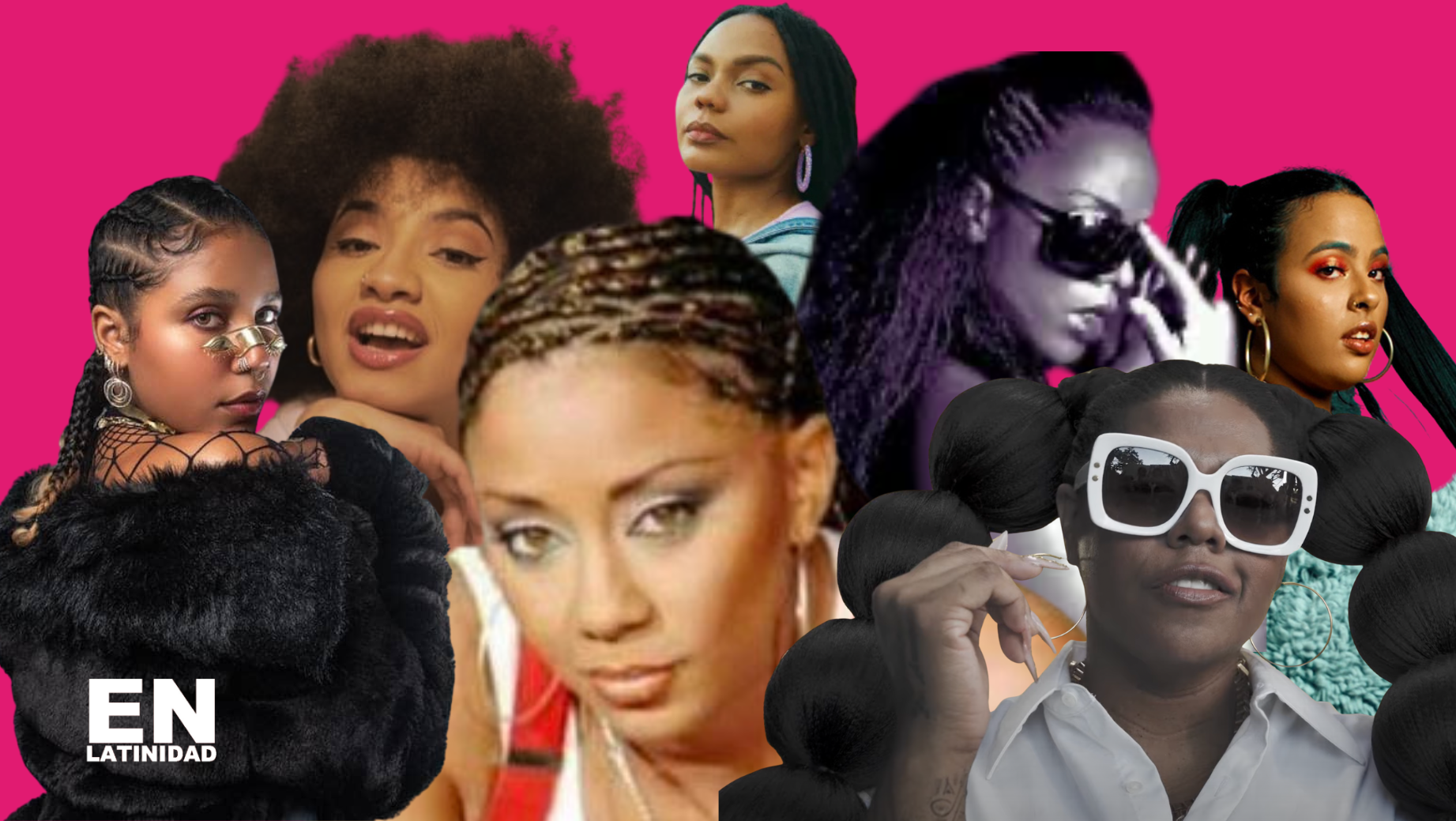
The legacy of dark-skinned Black women in reggaetón is both foundational and often overlooked, tracing back to the genre’s earliest roots in Panama. In the late 1980s and early 1990s, migrant Jamaican and Afro-Caribbean communities in Panama brought dancehall and reggae rhythms to the Canal Zone, creating “Reggae en Español,” a Spanish-language adaptation of Caribbean reggae. Among the first female figures to emerge from this scene was Rude Girl La Atrevida, a Panamanian artist who toured alongside pioneers such as El General. Her presence as a Black woman in this nascent music landscape helped lay the groundwork for female participation, centering Afro-Latin voices at a time when the genre was still forming.
As reggaetón migrated to Puerto Rico and began fusing with hip-hop, dembow, and other Latin rhythms, the visibility of Black women in the genre often diminished. While they were essential to the sound — frequently providing background vocals and choruses for male artists — they were rarely credited or celebrated as primary artists. Glory Glou, widely known simply as Glory, became one of the most emblematic voices in this period. Her sultry, powerful vocals can be heard on numerous reggaetón hits, and her solo album solidified her place in the genre’s history. Glory’s career exemplifies the pattern of Black women shaping the sound of reggaetón while often remaining in the shadows.
A breakthrough in conscious Afro-Latin representation came with La Sista, the Puerto Rican artist whose 2006 album Majestad Negroide openly embraced Black identity within reggaetón. Known for her pro-Black messaging and candid reflections on race and colorism, La Sista challenged the sanitized, lighter-skinned aesthetic that came to dominate the mainstream. Her work highlighted both the erasure of Black women in the industry and the potential for reggaetón to be a space of empowerment and self-expression. Other artists, such as Orquídea Negra of LDA, briefly contributed to the visibility of Black women, lending vocals to tracks like Reggaetón Latino by Boy Wonder Chosen Few.
In recent years, a new generation of Afro-Latin artists has emerged, reclaiming space in reggaetón and urban music. Dominican-American artists like Lesley from the Bronx and Anmily Brown have pushed creative boundaries, with Brown incorporating spiritual and Christian themes into her lyrics. Tokischa, a Dominican rapper, has become the most mainstream Black woman in Latin music, known for her bold lyricism, unapologetic persona, and perreo-driven sound. Her prominence demonstrates that Black women can compete successfully in the genre they helped shape, inspiring a new wave of artists to assert their voices.
The scarcity of dark-skinned Black women in reggaetón is so stark that even seasoned curators struggle to compile comprehensive lists without looking beyond the genre itself. In recent years, some have filled the gaps by adding Black women from adjacent or entirely different musical styles, not out of negligence but out of necessity. The result is an inflated sense of representation that doesn’t match the genre’s actual landscape. This pattern exposes a deeper truth: reggaetón has long sidelined the very women whose cultural roots helped shape its foundation, and the industry’s structural barriers remain so entrenched that authentic representation is nearly impossible to showcase without creative stretching. In the pursuit of asking Black femme artists, why they choose not to create reggaetón, several have gone on record saying that they simply “don’t see themselves reflected in the current reggaetón imagination,” a sentiment that underscores how distant the genre’s mainstream image remains from the women whose cultures helped build its foundation.
Despite these strides, systemic challenges remain. Black women in reggaetón are still underrepresented across all aspects of the industry, from production and songwriting to marketing and storytelling. While artists like Glory, La Sista, and Tokischa have broken barriers, the industry has yet to provide consistent support or equitable opportunities for Afro-Latina talent. Addressing this requires investing in Black women not only as performers but also as producers, engineers, creatives, and industry decision-makers.
The history of reggaetón is inseparable from Afro-Caribbean and Afro-Latin communities, and Black women have always played a central role in its development. Recognizing, honoring, and investing in their contributions is essential for the continued growth and authenticity of the genre. Their presence and artistry remind the industry and audiences alike that reggaetón’s power, innovation, and cultural relevance are built on the voices and creativity of Black women — past, present, and future.